No results for Try some of our popular collections:
Chupi meets verified standards for social and environmental business practices.
By Brian Durney, Wed, Aug 26, 2026
Most people spend more time researching a new phone than they do planning one of the most significant purchases of their lives. Choosing an engagement ring is not complicated, but it is easy to get wrong, especially if you walk into a jeweller without knowing your partner's style, your own budget, or the difference between a lab-grown and a natural diamond. This guide cuts through the noise so you can approach the process with confidence. Whether you are buying a ring as a surprise or shopping together as a couple, these are the decisions that actually matter when you want to get it right.
Key Insight
Explanation
Budget before browsing
Decide your upper limit before you look at a single ring. Browsing without a number in mind reliably leads to overspending or regret.
Cut quality matters most
Of the 4Cs, cut has the greatest impact on how brilliant a diamond looks. A well-cut lower-carat stone consistently outperforms a larger, poorly-cut one.
Lab-grown diamonds are real diamonds
They have the same physical and chemical properties as mined diamonds, and they typically cost significantly less for the same size and quality.
Style research beats guessing
Look at the jewellery your partner already wears daily. Existing preferences for yellow gold, silver, or rose gold are the most reliable guide you have.
Ethical sourcing is a real differentiator
Not all Irish jewellers are equal on ethics. A Certified B Corp designation is one of the few independently verified signals of genuine ethical practice.
Ring size is not a fixed measurement
Finger size changes with temperature and time of day. Measure in the evening, and always check resizing policy before purchasing.
Shopping together is increasingly the norm
Research from The Knot's 2023 Jewelry and Engagement Study found that 78% of those proposed to are involved in choosing their ring. A shared decision rarely leads to disappointment.
The single most common mistake when buying an engagement ring is starting with style and working backwards to price. This approach almost always ends with either overspending or settling for something that does not feel right. Start with a number you are genuinely comfortable with, not an aspirational one, and hold to it.
There is no universal rule for how much to spend. Older conventions about spending a certain number of months' salary on a ring are marketing constructs, not financial wisdom. What matters is that your budget reflects your actual financial position as a couple, particularly if you are planning a wedding shortly after the engagement.
A practical approach is to define a range rather than a fixed number. Your lower limit is what you would spend without any hesitation. Your upper limit is what you could spend if the right ring required it. The gap between those two figures gives a jeweller enough room to show you real options without wasting your time on rings outside your reach.
Pro tip: If you are buying the ring as a surprise, set your budget before you visit any jeweller and do not reveal it immediately. A good jeweller will ask about your range; a less trustworthy one will show you the most expensive options first and work down.
The 4Cs, cut, colour, clarity, and carat weight, are the international standard for evaluating diamond quality. Understanding each one means you can make trade-offs that suit your priorities rather than relying solely on what a salesperson recommends.
Cut is not the shape of the diamond. It refers to how well the diamond's facets interact with light, which determines how much it sparkles. A diamond graded Excellent or Very Good in cut will look dramatically more brilliant than a larger diamond with a poor cut grade. If you have to prioritise one of the 4Cs, always prioritise cut quality.
Diamond colour is graded from D (completely colourless) to Z (noticeably yellow or brown tint). In practice, the difference between a D and a G or H colour grade is almost invisible to the naked eye, especially once the diamond is set in a ring. Choosing an H colour over a D can free up significant budget without any visible sacrifice in beauty.
Clarity measures internal inclusions and surface blemishes. A diamond graded VS1 or VS2 (Very Slightly Included) will look flawless to anyone not using a jeweller's loupe. Going further down to SI1 can still yield a beautiful diamond if the inclusions are positioned where the setting will cover them. Eye-clean is the standard to aim for, not technically flawless.
Carat measures weight, not diameter. Two diamonds of the same carat weight can look very different in size depending on their cut and shape. Round diamonds face up smaller than oval or elongated shapes of the same carat. If size on the finger matters to your partner, consider shape alongside carat before you decide.
The setting is the architecture of the ring. It determines how the stone is held, how much of the diamond is visible, and whether the ring suits an active lifestyle. Getting this wrong is expensive to fix after the fact.
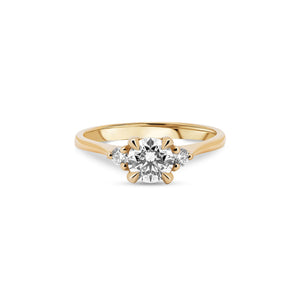
A solitaire setting holds a single centre stone with minimal surrounding metalwork. It is the most classic engagement ring style and the one that tends to age best across changing trends. A well-chosen solitaire never looks dated. This is also the setting that puts the most emphasis on the diamond itself, which means cut quality matters even more here than in busier designs.
A halo surrounds the centre stone with smaller accent diamonds, which makes the central stone appear larger and adds overall sparkle. This is a strong choice if your partner loves maximum brilliance, but it does require more maintenance over time, as the small stones can work loose with daily wear.
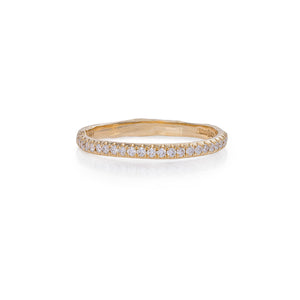
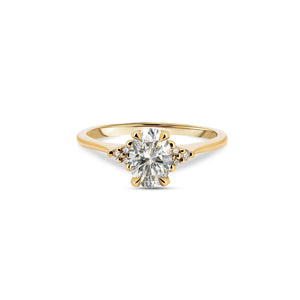
Pavé settings embed small diamonds along the band itself, adding sparkle without increasing the size of the centre stone. Side-stone settings flank the centre diamond with matching stones, which can add character to a more modest centre diamond. Both options suit partners who value detail and craftsmanship over a single dominant stone.
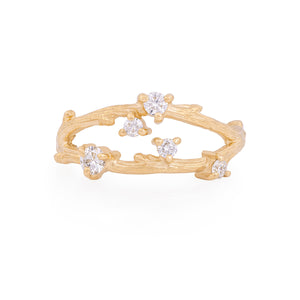
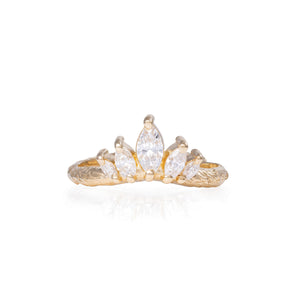
At Chupi, many of the most popular engagement ring designs draw on organic shapes from the natural world. Nature-inspired settings, featuring leaf motifs, irregular organic forms, and textured bands, suit partners whose jewellery style already tends towards the artistic or handcrafted. These are not trend-led choices; they hold their meaning and beauty over decades.
Pro tip: Look at the rings your partner already wears daily. If they prefer yellow gold, a platinum setting will feel wrong on their hand even if it is technically more expensive. The metal and style of their existing jewellery is the most reliable guide you have.
The best engagement ring is not the most expensive one. It is the one that reflects how well you know the person wearing it. Choosing with genuine care and attention always produces a better outcome than choosing by budget alone.
This is the question every Irish couple is asking right now, and there is no universally correct answer. What matters is understanding the real differences so you can make a decision that reflects your own values and priorities.
Lab-grown diamonds are produced in controlled environments that replicate the conditions under which natural diamonds form in the earth. The result is a diamond that is chemically, optically, and physically identical to a mined diamond. They are not simulants like cubic zirconia. A gemologist cannot distinguish a lab-grown diamond from a natural one without specialist equipment.
Factor
Natural Diamond
Lab-Grown Diamond
Origin
Formed over billions of years deep in the earth
Grown in a laboratory over weeks using advanced technology
Price
Typically higher for equivalent size and quality
Typically more affordable for the same 4C grades
Appearance
Identical to lab-grown when eye-clean and well-cut
Identical to natural when eye-clean and well-cut
Environmental impact
Mining carries a significant land and water footprint
Lower physical footprint, but energy-intensive to produce
Certification
Certified by GIA, IGI, and other grading bodies
Also certified by GIA, IGI, and other grading bodies
Resale value
Historically holds value better over time
Resale market is still developing and less established
If maximising the visible size and quality of the diamond within your budget is the priority, a lab-grown diamond is the more logical choice. If the geological rarity and history of a natural diamond carries meaning for you and your partner, that is a legitimate reason to choose natural. Both are valid decisions. What is not valid is being told one is inferior when it is simply different.
Chupi offers both natural and lab-grown diamond options across its engagement ring collection, which means you can make this decision based on values and preference rather than what happens to be in stock.
The Irish engagement ring market has more options than ever, from high-street chains to independent specialists to fully online retailers. The quality gap between them is significant, and the wrong choice is expensive to undo.
Ask directly: where is this ring made? Many rings sold in Ireland are imported, assembled elsewhere, and then sold with a domestic price tag. Handmade in Ireland is not a marketing claim every jeweller can make. Chupi is one of the few brands that genuinely handcrafts its rings in Ireland, which means the production standards, the repair process, and the origin story of the piece are all traceable and genuine.
Ethical sourcing claims are widespread and largely unverifiable without independent certification. The B Corp certification is one of the most rigorous third-party assessments of a business's social and environmental performance. Chupi is Ireland's only Certified B Corp jeweller, which makes it possible to verify the ethics behind the purchase rather than simply taking a brand's word for it. When comparing against other Irish jewellers, this distinction is worth weighing seriously.
A ring is not a transaction; it is a piece you will wear for the rest of your life. The ability to customise the setting, metal, stone, and design details makes a real difference to how personal the result feels. Ask any jeweller you consider whether true bespoke design is available or whether "customisation" simply means choosing from a limited set of pre-made variants.
Engagement rings require maintenance. Prongs wear down. Stones can be knocked. Resizing becomes necessary as fingers change over time. Before committing to a jeweller, ask about their resizing policy, their repair turnaround time, and whether maintenance work is handled in-house or sent away. A jeweller who cannot give clear answers to these questions before the sale will not give better answers after it.
These three decisions are often treated as afterthoughts, but each one affects how much the ring is loved on a daily basis. Get the metal wrong and the ring clashes with everything your partner already wears. Get the size wrong without a clear resizing option and you have a problem before the honeymoon.
Finger size is not fixed. It changes with temperature, time of day, and even the time of year. A finger measured in the morning in winter will be smaller than the same finger measured in the evening in summer. For the most accurate measurement, measure in the evening when the finger is at its largest. If you are buying as a surprise, borrow a ring your partner wears on their ring finger and have a jeweller measure the internal diameter. Most good jewellers, including Chupi, offer resizing on their rings, so an approximate size is workable as long as you confirm the resizing policy before purchasing.
The three main options for engagement rings are yellow gold, white gold, and platinum. Rose gold has grown in popularity and remains a strong choice for partners with a warmer style aesthetic. Platinum is the most durable and develops a patina over time that many wearers love. White gold is rhodium-plated, which means it requires replating every few years to maintain its colour. Yellow gold is experiencing a strong return to popularity and suits a wider range of skin tones than it is often given credit for. The correct answer is whatever metal your partner's existing jewellery is in.
If no existing ring style feels exactly right, a bespoke engagement ring is not as complex or expensive as it sounds. Chupi's bespoke process allows couples to work directly with the design team to create a ring that is personal in a way a catalogue piece cannot be. For couples who have a clear sense of what they want but cannot find it ready-made, this is the most direct route to a ring that feels genuinely theirs.
The most reliable method is to look at the jewellery they already wear every day. Pay attention to the metal colour, the scale of pieces they choose, and whether they tend towards classic or more unusual designs. If you have access to their social media saves or have mutual friends they may have mentioned preferences to, those are worth checking. When in doubt, a classic solitaire in their preferred metal is the choice most likely to be loved long-term. Alternatively, shopping together removes the guesswork entirely and, as research consistently shows, is increasingly the way most couples approach this decision.
A lab-grown diamond is chemically, physically, and optically identical to a natural diamond. The only difference is origin. Natural diamonds formed deep in the earth over billions of years and were mined from the ground. Lab-grown diamonds are created in a controlled environment that replicates those conditions. Both are real diamonds. Both can be certified by the same grading bodies. The choice between them is a matter of values and budget, not quality.
There is no correct figure. The older convention of spending two or three months' salary was created by jewellery marketing campaigns in the mid-20th century and has no basis in financial planning or relationship health. Spend what you are genuinely comfortable spending without affecting your financial stability as a couple. The emotional weight of a ring comes from the thought and care behind it, not the price tag attached to it.
Most engagement rings can be resized, though the ease of resizing depends on the setting and metal. Rings with pavé or eternity-style bands set with stones all the way around are harder to resize without disrupting the stone layout. Before purchasing, always confirm the jeweller's resizing policy and whether resizing is handled in-house. Chupi offers resizing on its rings, and knowing this in advance removes the pressure of getting the size exactly right on the first attempt.
B Corp certification is an independent, third-party assessment of a company's social and environmental performance, transparency, and accountability. To achieve certification, a business must meet verified standards across areas including supply chain ethics, environmental impact, worker treatment, and community impact. For a jewellery brand, it means the ethical sourcing claims are not just marketing copy but have been independently scrutinised and verified. Chupi is the only jeweller in Ireland to hold this certification, which is a meaningful differentiator when ethical sourcing matters to you.
For a first-time buyer, seeing rings in person is valuable because scale, weight, and sparkle are genuinely difficult to assess from photographs. That said, many reputable jewellers, including Chupi, offer detailed online browsing that is useful for narrowing down styles before an in-person appointment. The most effective approach is to research thoroughly online, identify a shortlist of styles, then visit a showroom to see your top choices in person before committing. For bespoke or customised rings, an in-person or virtual consultation with the design team will always produce a better result than purchasing blind.
If you are at the beginning of this process or have already been through it, we would love to hear what questions you found most helpful to answer before making your decision.
The Knot's complete step-by-step guide to buying an engagement ring, including research on how couples shop together
Vogue's practical tips for avoiding the most common mistakes when buying an engagement ring
A detailed jewellery buying guide covering diamond selection, settings, and ring styles for 2025
Enjoy dedicated time with a Chupi consultant to explore our engagement and wedding jewellery, either in store or through a private online video call.